
Karahut, War Charm & Ceremonial Ornament, East Sepik Province, Papua New Guinea
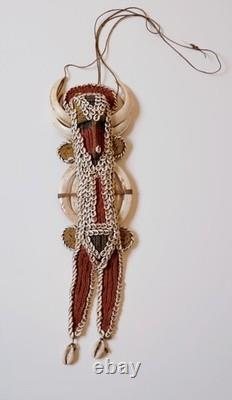
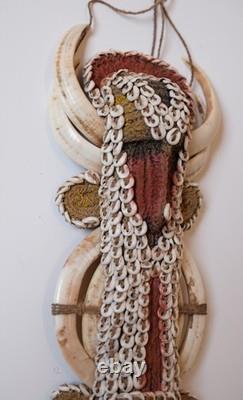
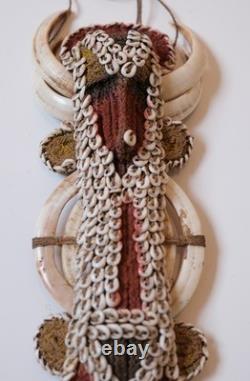
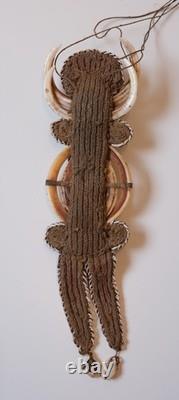
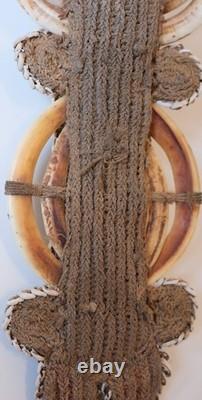

Karahut (Abelam War Charm and Ceremonial Ornament), East Sepik Province, Papua New Guinea. Is a traditional spiritual ornament of the Abelam people of the East Sepik region of Papua New Guinea. Worn or held as a protective charm, it embodies both ceremonial significance and the fierce power of the wild boar. Typically anthropomorphic in form, a karahut features a stylized face adorned with boar tusks and shell ornaments, and was traditionally held between the teeth or worn across the neck and chest. Derives from the Abelam words kara ("pig/boar") and ut ("net bag"), referring both to its boar-like power and to the hidden magical leaves and herbs originally carried within.
War Charm: Worn in times of conflict to grant the wearer the strength and ferocity of a wild boar. The projecting tusks gave a fearsome appearance and offered spiritual protection.
Ceremonial Object: Held between the teeth during ritual events-such as initiations-to "seal" the mouth and prevent malevolent spirits from entering the body. Adornment: Also worn as a neck or chest ornament during festive.
Ritual Decoration: Occasionally used to decorate ceremonial yams, similar to yam masks. Construction Made from woven hibiscus bark twine and sennit fiber, the karahut is embellished with shell ornaments-often nassa shells-and natural boar tusks. Surfaces may be finished with natural pigments, including ochre and charcoal. Cultural Context Created by the Abelam communities of the Prince Alexander Mountains, these ornaments reflect the broader Abelam tradition in which art serves as both spiritual technology and social identity.This example was collected in the 1960s and is in exceptional condition for its age having been kept in storage for most of its life after collection. Length 33cm x 10cm at top. Please view the photos carefully as they make up an important part of the description.